
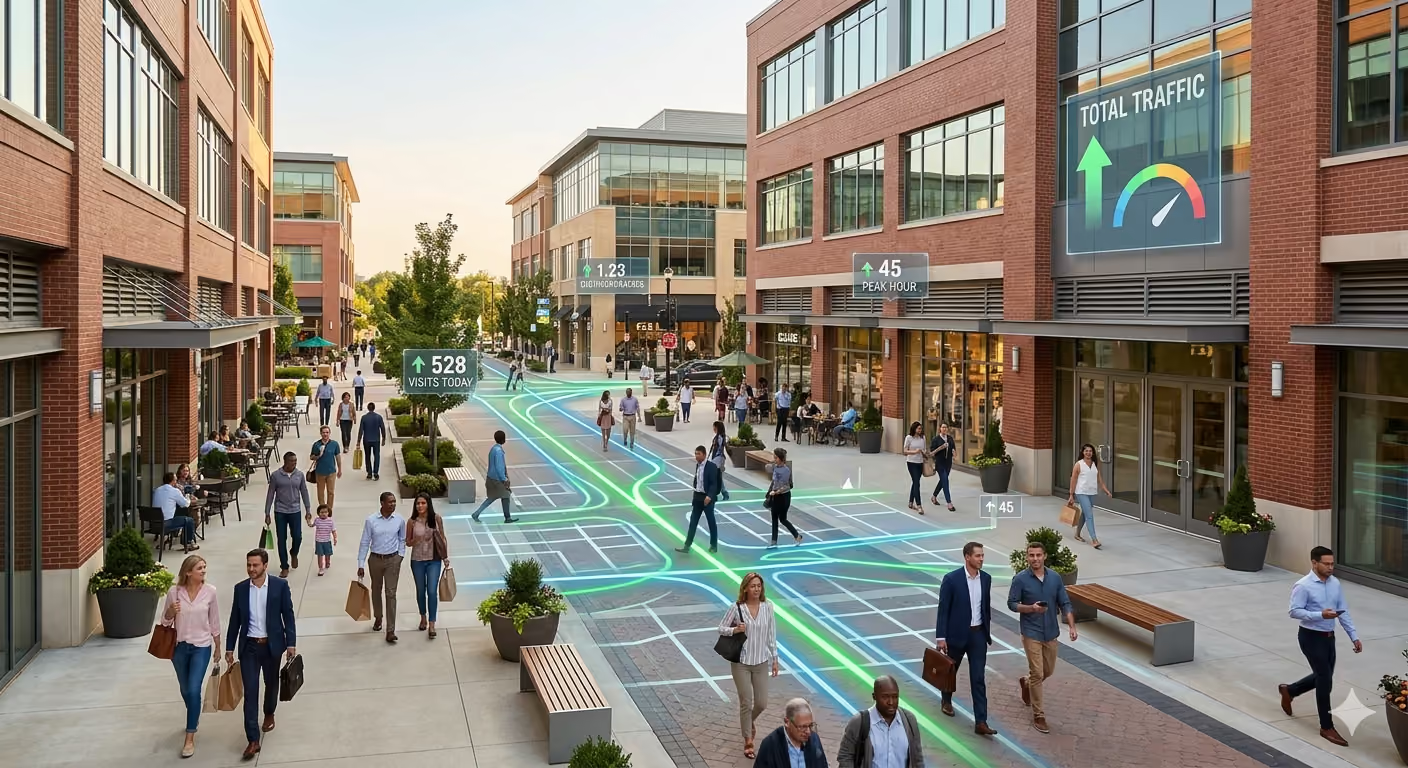
From visit counts to investment decisions, here is what foot traffic data actually tells you and why CRE professionals rely on it.
Introduction to Foot Traffic Data
H3: Why foot traffic data matters for CRE
Most property decisions look straightforward on paper until you ask one uncomfortable question: how is the asset actually performing?
Because occupancy figures do not tell you that. Rent rolls do not tell you that. A lease that looks healthy can be masking a tenant whose customer visits have been declining for three straight quarters. By the time it shows up in the financials, the conversation is already late.
That is why foot traffic data has become such a practical tool for commercial real estate professionals. It adds the "what is actually happening on the ground" layer to property decisions, so landlords, investors, and asset managers can spot changes sooner and act before the problem gets expensive.
What Is Foot Traffic Data?
Foot traffic data measures real-world visits to physical locations using signals from mobile devices, specifically GPS, Wi-Fi, and Bluetooth beacons. It tells you how many people visited, when they came, how long they stayed, and where they travelled from before they arrived and where else they visited.
The term gets used loosely, so it is worth being precise. Foot traffic data is not a door counter or a parking lot camera. It is a large-scale picture of how people move through the real world, built from billions of anonymized location signals. At ADVAN, that means tracking over 45 million U.S. devices and 65 million global devices across more than 9 million Points of Interest (POIs), which are individual tracked locations like stores, malls, warehouses, and office buildings.
A simple way to think about it: A sales report tells you what a tenant earned last quarter. Foot traffic data tells you whether anyone is actually showing up right now, and whether that number is trending in the right direction.
How Is Foot Traffic Data Collected?
Foot traffic data is built from anonymized location signals that mobile devices emit constantly. When a device enters a geofence, which is a virtual boundary drawn around a physical location, that visit gets recorded. The signals come from GPS coordinates, Wi-Fi network proximity, and Bluetooth beacons.
Two things determine whether the data you are looking at is actually useful: where the signals come from, and how accurately the geofences are drawn.
Why signal source matters
Many providers source their location signals from ad exchanges, which is data packaged alongside mobile advertising. This introduces real bias. It over-represents people who click on mobile ads and under-represents older or less digitally active demographics. ADVAN uses GPS, Wi-Fi, and beacon signals only. No ad exchange data. The result is a cleaner, more representative picture of who actually visited a location.
Why geofencing accuracy matters
The standard industry approach is to draw a radius around a known address. That sounds reasonable until you apply it to a strip mall where four tenants share a parking lot, or a mixed-use building where a gym sits above a coffee shop. A radius cannot separate those visits. ADVAN has built over 10 million hand-drawn geofences, each traced to the actual physical footprint of the property being measured. It is painstaking work, and it is precisely what makes property-level analysis reliable rather than approximate.
What Does Foot Traffic Data Actually Measure?
Good foot traffic analytics goes well beyond counting visits. Here is what the key metrics actually tell you:
Visit count: How many device visits were recorded at a location in a given period
Dwell time: How long visitors stayed, a useful proxy for engagement and purchase intent
Visit frequency: How often the same visitor returns, which signals loyalty and retention
Peak periods: The busiest hours and days, helpful for operational benchmarking
True trade area: Where visitors actually live or work, based on real movement rather than a drawn radius
Cross-visitation: Which other locations the same visitors frequent, revealing competitive behaviour
Visitor demographics: The age, income, and household profile of the people visiting
Cannibalization: How much of a location's visitor base overlaps with nearby same-brand locations, revealing whether new openings draw new customers or pull from existing ones.
How Do CRE Landlords and Investors Use Foot Traffic Data?
Foot traffic data now plays a role at every stage of the commercial real estate cycle, from buying a property to managing it to deciding when to sell.
Tracking tenant performance
Landlords use foot traffic benchmarks to understand whether a tenant is keeping pace with its category or quietly falling behind. If a grocery anchor's visit counts are declining 8% while comparable stores across similar markets are flat, that is an early warning sign that needs addressing before it affects NOI (Net Operating Income, the primary measure of a property's profitability).
Supporting lease negotiations
Foot traffic data gives landlords an independent evidence base when negotiating leases. Rather than relying on tenant-reported sales figures, which landlords often do not have direct access to, they can bring objective traffic data showing how a space performs relative to the competitive set.
Underwriting acquisitions
Before committing capital, investors want to know whether a property's story actually holds up. A centre might be fully leased, but if anchor traffic has been declining for six consecutive quarters, the occupancy figures are hiding real risk. Foot traffic catches what rent rolls do not.
Identifying void opportunities
By understanding which tenant categories drive visits and which are absent, landlords can spot gaps in their mix. This is called void analysis, and it helps with recruiting tenants who serve demand that the current lineup is not meeting.
Monitoring portfolios at scale
For asset managers and REITs with large portfolios, consistent foot traffic data makes it possible to track performance across many properties systematically, rather than waiting for quarterly reports to surface problems.
Raw Visit Counts vs. Layered Analytics
A raw visit count is a starting point, not an answer. It tells you something went up or down. It does not tell you why, or what to do about it.
Layered analytics adds context that turns a data point into a decision. ADVAN's SpendView tracks credit and debit card transactions across 5,000 or more retailers and can separate in-store from online revenue. Its normalization methodology achieves a 0.9 or higher year-over-year correlation for the majority of retailers, tested against hundreds of publicly filed financial statements. That is a meaningful level of accuracy for anyone underwriting a retail asset.
Demographic overlays add visitor income, age, and household data to the visit signal, helping answer whether the people actually coming to a location match the profile a tenant is built for. Migration and population data goes one level further, showing whether the trade area itself is growing or shrinking. For a long-duration lease or a new development decision, that context matters as much as current traffic levels.
The combination of mobility data, spend data, and demographic data within a single platform is what separates serious location intelligence from a basic visit counter.
Is Foot Traffic Data Accurate Enough for Investment Decisions?
ADVAN's platform achieves high ground-truth accuracy, verified against physical people counters and reported tenant data. Data is delivered on a T+1 basis, meaning yesterday's data is available before today's market opens. That is fast enough to be genuinely useful, not just a historical record.
The honest comparison here is not foot traffic data against perfect information. It is foot traffic data against what investors and landlords were relying on before it existed, which was often a combination of tenant-reported sales, annual lease comps, and judgment calls. Against that baseline, the accuracy threshold for real decisions is clearly met.
Two things are worth watching. First, data quality varies significantly across providers. Platforms that source signals from ad exchanges introduce panel bias that can distort visitor demographics and inflate visit volumes in certain categories. Second, foot traffic measures visits, not sales, though combining it with consumer spend data closes most of that gap.
Frequently Asked Questions
What is foot traffic data?
Foot traffic data measures how many people visit a physical location, when they come, how long they stay, and where they travel from, using anonymized signals from mobile devices. It gives CRE professionals an independent view of how locations are actually performing without relying on what tenants choose to report.
How is foot traffic data collected?
It is collected from GPS coordinates, Wi-Fi proximity signals, and Bluetooth beacons that mobile devices emit. When a device enters a geofenced area around a physical location, that visit is recorded. Providers using GPS, Wi-Fi, and beacon data only, as ADVAN does, deliver more reliable results than those sourcing from ad exchanges, which introduce demographic bias.
How do CRE landlords use foot traffic data?
Landlords use it to track tenant performance, support lease negotiations, conduct acquisition due diligence, identify gaps in their tenant mix, and monitor portfolio health across multiple properties. Because ADVAN delivers data on a T+1 basis, landlords can spot issues early before they affect Net Operating Income or create problems at lease renewal.
Is foot traffic data accurate enough for investment decisions?
Yes, when it comes from a provider with rigorous methodology. ADVAN achieves high ground-truth accuracy, validated against physical people counters and reported tenant data. The key risks are panel bias from ad exchange signals and automated geofencing that cannot distinguish between adjacent tenants. Institutions using this data for capital allocation should ask hard questions about signal source and geofencing methodology before choosing a provider.
Foot traffic data as a practical edge
Foot traffic data has become a core input for commercial real estate professionals who want to track performance, underwrite assets, and manage portfolios with something more reliable than intuition and rent rolls. The logic is simple: where people go is a direct signal of where economic activity is actually happening. Getting that signal right, with clean data, precise geofencing, and the right analytical layers on top, is what turns a measurement into a genuine intelligence advantage.