Key Points:
- Albertsons reported another quarter of lower sales volume and it reduced its sales and earnings outlook.
- Management expects another round of supplier price increases in the 2H stemming from drought impacts and fuel-cost flow-through. That’s going to be a difficult negotiation given that Albertsons needs to demonstrate greater value to consumers and maintain its already low profitability.
- Our theme of “Big Food’s Crucible” continues to intensify and broaden. We expect ongoing consolidation of regional grocers, like what happened with Giant Eagle.
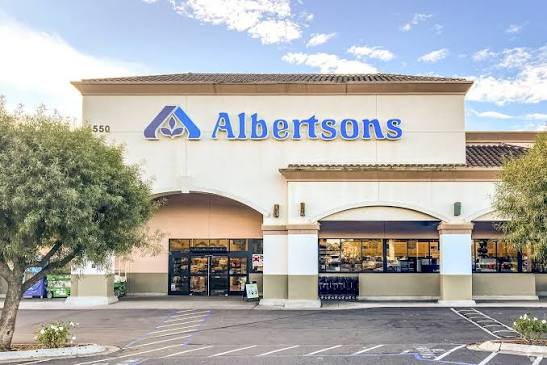
Albertsons Companies reported softer sales for its FQ1 period, lowered its outlook, accelerated / deepened its cost savings program, and announced the retirement of its President and CFO, Sharon McCollam. Readers will recall that we’ve been increasingly concerned about Big Food and conventional grocers (see here, here, and here) given their price and merchandise positioning and the large share gains by club, deep discount, and Amazon. That concern also extends to suppliers and grocery-anchored retail centers. Albertsons reported a -0.8% decline in comp-sales, excluding pharmacy, grocery sales declined in the -2% range and volume in the -4% range. Observed traffic to Albertsons / Safeway / Vons increased 1.03% / 0.47% / 0.26%, with sales worse due to fewer items in the basket. The average check decreased -0.53% in the quarter. As food-at-home inflation increased 2.72% in the period, that implies a -3.25% decline in items-per-basket. Albertsons has been boosting traffic by pulsing digital coupons to its loyalty base; we can also see the lower basket in sales-per-loyalty member declining -12% YoY.
When speaking of the changes, CEO Susan Morris said, “Strengthen execution in the areas that matter most to our customers: fresh, service, store standards, local merchandising, and community connection,” implying that these are not where they need to be and also rhyming with Greg Foran’s (Kroger CEO) priorities. On the customer experience and fresh, Morris said, “The customer experience, anchored in our fresh and food forward offerings for quality, service, and differentiation matter most. In the current environment, we believe the appropriate response is to make life simpler for our customers. We're accelerating our investments because improving the customer value proposition is the most direct path to strengthening customer engagement, loyalty, and long-term growth. While those investments create some near-term pressure on earnings, we believe they will improve the overall growth trajectory of the business.”
On the lowered outlook, McCollam said, “Our more cautious view reflects ongoing pressure on lower-income consumers, softness in grocery industry unit trends, and the potential for additional affordability pressure from supplier cost increases. Accordingly, our updated outlook reflects both a more challenging near-term demand environment and increased investments in customer value. While these actions will pressure near-term earnings, we believe they are strategically necessary to strengthen customer engagement, accelerate unit growth, and improve the long-term trajectory of the business.” We emboldened the “supplier cost” statement because Albertsons is hearing it from their suppliers (drought impacts and fuel-cost flow-through). However, while Albertsons can take out costs ($2B+ plan ongoing) and boost profits with its retail media network, its low operating margins create a limit. And so, to drive volume, it’s the Big Food suppliers that are likely going to have to give.
On the issue of increases, Morris said, “So we're seeing supplier cost increases that's just a part of our business. As we look towards the second half of the year, we're expecting to see incremental pressure there. And as a reminder, our first response is always pushing back. We are also manufacturers. We understand where cost increases are coming from, whether it's fuel, packaging and so forth. We push back. And then a negotiation begins. And in worst case scenarios, we have to make a tough choice on whether or not we're going to accept care those products. But ideally, it's about a negotiation. We're going to be pushing our vendor partners very hard to absorb those costs on their own. We're being very clear today with our goals on rightsizing our value proposition. We're being clearer than we've ever been before. With our manufacturing and vendor partners on the centralization of center store, we expect them to lean in.”
And on where the merchandise offering needs to go, Morris said, “What we need is to give them consistency and execution, great store standards, great service and then delight them and prevent them from going anywhere else by giving them the offering that they're looking for in their local community, whether that's a different assortment of fresh, whether it's the right complement of barbecue sauces and seasonings, whether it's really paying attention to how we show up differently in produce, knowing that I'm in Boise, Idaho today, Huckleberry's are going to be a big deal next month. Also next month in New Mexico, I'm going to be roasting Hatch Green chili on for my stores, being able to unleash the magic of that local marketing and merchandising that appeals to the customers that we're serving by neighborhood, that's a key point of difference... And as I look across the store, in many retailers, we have certain set sizes or space allocations or adjacencies that have been the same for decades. The customer has changed, and we've been implementing what we call macro resets in key markets across the company with great success. And this is about rightsizing space allocation for the way customers shop today... Our macro resets are leveraging the way that our customers are shopping today and how they're shopping tomorrow, rightsizing space creating more logical adjacencies and amplifying holding power on the categories where we see the most growth.” Our read, it’s going to get more difficult for Big Food to keep its shelf space.