
Key points:
- Amazon’s North American Retail segment delivered accelerating unit and revenue growth, driven by 40%+ growth in its large grocery business, expanded selection, and sharp pricing. Operating margins also expanded.
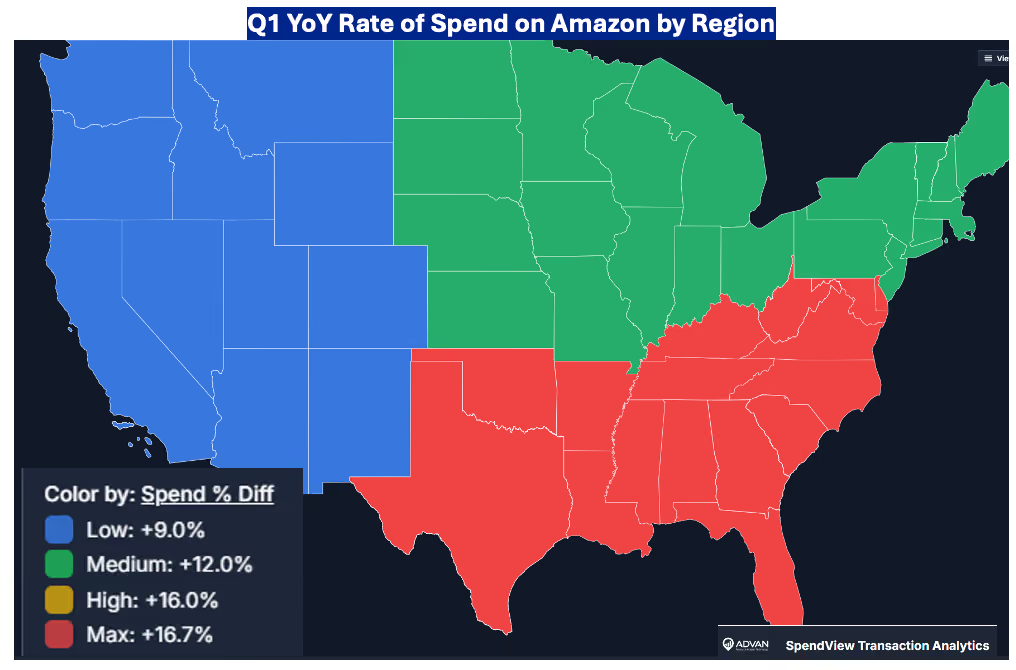
- The Southwest is the fastest-growing region at 17% spend growth for Q1.
- Nationwide observed activity / spend accelerated in April. Q2 revenue guidance was higher than consensus.
- Should you want to talk about any of this, send me an e-mail. (Find our Amazon preview here.)
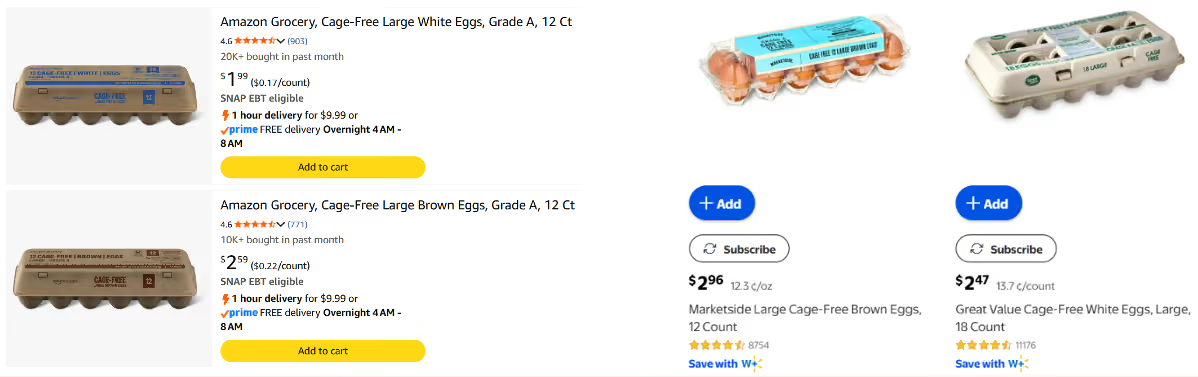
Our focus for Amazon is its North American Retail business segment (which we will call “Retail”) and how its expansion into grocery is disrupting the incumbents. Amazon’s disclosures are modest, but after over twenty years of closely following Amazon, we’ve become skilled at reading between the lines and Advan’s observed activity at the fulfillment centers and SpendViewTM (transaction data) are very helpful in supporting our reads. For the quarter, observed activity at the large fulfillment centers increased +7%; April increased +13%. Observed activity at the regional sortation centers increased +10%; April increased +13%. Observed spend for the quarter increased +12%.What struck us in Q1 results was the acceleration in unit growth for Retail at +17%, up +600bps QoQ. (On a 2-yr CAGR basis, growth accelerated +100bps to +12%.) However, product revenue growth only accelerated +200bps to +11%-ish (product revenue is for where Amazon is the record of merchant); additionally, product COGS grew at a +200bps faster rate than product revenue. Grocery and consumables are the categories that are driving units and COGS faster than revenue, and they carry a negative mix (i.e. lower ASPs and thinner margins). Additionally, Amazon and its sellers are largely eating the impact of tariffs and leaning into EDLP with CEO Andy Jassy saying, “In Q1, the average prices of products offered on Amazon.com decreased compared to the same period last year.”Amazon is intentionally keeping its grocery prices very low to win consideration and drive adoption. For example, if a Minneapolis Prime member purchased a dozen eggs today, the price is $1.99-$2.59 and in-line with Walmart’s prices. Assuming Retail’s non-grocery business grew at a +7% rate, its grocery business will have grown around +40%, or +$54B on an annualized basis*, which is up from last year’s $50B. On the call, Jassy said, “Our grocery business continues to grow quickly across both perishables and nonperishables… Prime members are loving the convenience of getting fresh groceries alongside other products they're buying on Amazon, and perishable sales have grown over 40x year-over-year and make up 9 of the top 10 most ordered items for same-day delivery where the service is available. Customers shopping same-day perishables build larger baskets, adding nearly 3x as many items to their order and spend over 80% more than customers who don't.” (He didn’t share how the total $204B grocery business grew for the quarter. For perspective, Walmart’s grocery business has a $304B run rate.)
Regionally, the rate of spend on Amazon.com is highest in the Southwest, a dynamic that Walmart and Publix must be aware of.