Key Points:
- The Campbell’s Companies reported very weak quarterly and annual results, guided for more declines in the next year, and slashed its dividend. Tyson Foods cut its outlook (only 1 month since issuance), pointing to a more challenging cost and consumer environment. Both were getting ahead of next week’s conference and investor meetings.
- Costco, again, reported sales and market share gains in food for August, that were largely in line with the prior two months. Share gains by club from conventional grocery is a negative channel shift for Big Food.
- We updated our Amazon activity tracker and its success and growth in perishables and food (#2 grocer in the US) appear undiminished for the 1st two months of its quarter. Like with Costco, Amazon is a negative channel shift for Big Food, as well as conventional grocery and grocery-anchored CRE.
- Per grocery-anchored CRE and non-conventional grocery, Sprouts announced its expected CEO transition. Advan’s traffic data looks to be largely in line with the rate when it last spoke to investors and guided. We don’t expect any new strategy or changes to its capital allocation until the incoming CEO, Nick Konat, is settled in and after they’ve lapped less difficult comps. That puts an update out almost a year from now.
Quarterly and annual results from Campbell’s reinforced the ongoing challenges facing Big Food (see our presentation). That’s extended to conventional grocery, which will be one of the highlights next week with Kroger’s earnings (see our Albertsons review). One of the bigger challenges (and their industries’) is the outsized amount of market share going to the club channel, Walmart, and Amazon.
For August, Costco’s US comp-sales were again impressive at +6.35% (adj for Labor Day), with food comps +MSD. Costco’s observed traffic (per Advan) was +2.5% and reported traffic was +2.3% (or +3.1% adj for Labor Day, which is very similar MoM). High gas prices have been driving members to club stores and that’s converted into more shopping trips; as such, the club stores have not suffered a depression in visits as gas prices spike, by contrast, others have suffered (May / June and likely again here in September)– see our story on Walmart and Sam’s. What club offers is value, especially on its private label offering, that results in less volume and market share for Big Food. For the Big Food SKUs that are stocked, these big retailers pay less to suppliers (penny profit per item or per calorie) than regional grocers, leading to a negative channel mix. Per Amazon this quarter, we’ve seen no attenuation in activity at its local sortation centers, which we take to be a proxy for its consumables category’s pace of growth. This is a lot of volume and consumption that is going through a big retailer, resulting in consumption that iss an adverse channel mix for Big Food. (Our take on Amazon’s Q2 here.)
Adding to these Big Food woes is higher diesel and commodity costs (+M to HSD for Campbell’s), a more demanding consumer, less consumer demand vis-à-vis GLP-1s, and on, and on. It keeps piling up. Next week, we also expect to learn more about how Big Food is adapting to its many challenges from the myriad of presentations at the Barclays conference. (And yes, more negative pre-announcements are possible.)
While Tyson Foods avoids some of Big Food’s challenges, the beef industry is certainly impacted by cost pressure and consumer pressure. Tyson negatively pre-announced today and the release read, “Consumer caution around discretionary spending has created a more challenging foodservice demand environment.” Yesterday, we wrote a piece on how high gas prices were leading to fewer gallons pumped per visit and softer in-store transactions, with the downshift starting mid-July and most starkly in Texas and California. Nationwide, since mid-July, traffic for limited service (per our index) has slid -50bps; in California the slide was worse at -75bps.
Back to Campbell’s earnings results for its fiscal Q4 period (August 2nd), which were so dire it’s best to bullet them.
- Sales declined 8%, or -1% on an organic basis, including the snacks division declining 6%.
- Volume/mix for the snacks division has now declined 21% from 2019’s level.
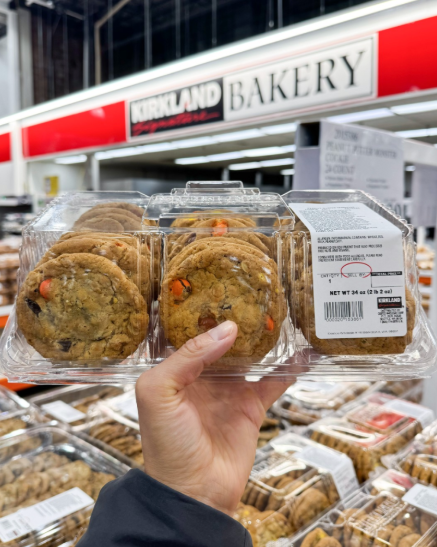
- We still love Goldfish and Pepperidge Farm cookies, and generally so do others, but perhaps not as much as they did as Pepperidge Farm cookies declined 4.7%. The larger challenge is the pretzels and chips business, where volume declined around 9%. Recall, Frito-Lay won a lot of shelf space earlier this year.
- In response to the volume and business pressures in Snacks, they are closing two plants and reducing the workforce elsewhere (-13%).
- EBIT-adj declined 17% YoY.
- F2027 EPS is expected to fall an additional 20%, inclusive of a $100m expense reduction program that if it flowed through, would be 10% to earnings. Said differently, the business’ returns, as-is, are dropping 30%+.
- Campbells’s cut its dividend by 36%. (Peer Conagra cut its dividend by half in July.)
To put it mildly, that’s a hard outlook, and earnings rebase, and significant changes to the offering need to be made. They also want to get beyond the Frito-Lay disruption to have that in the base period. When will Big Food’s troubles pass? We don’t have the answer, but we will know it when the outsized market share capture by Walmart, club, and Amazon becomes much less. However, given what we shared about August for Costco and Amazon, we remain far off for this year. What we are carefully watching is mid-week traffic to conventional grocery. If that starts to lapse, then Big Food’s problems will worsen. Alternatively, if it strengthens and the basket size grows, Big Food will grow again. This is also what we will be listening for at the Baclay’s conference. That also makes Kroger’s results and earnings call an important event, not only for its investors and competitors, but also for CRE and REIT investors.