
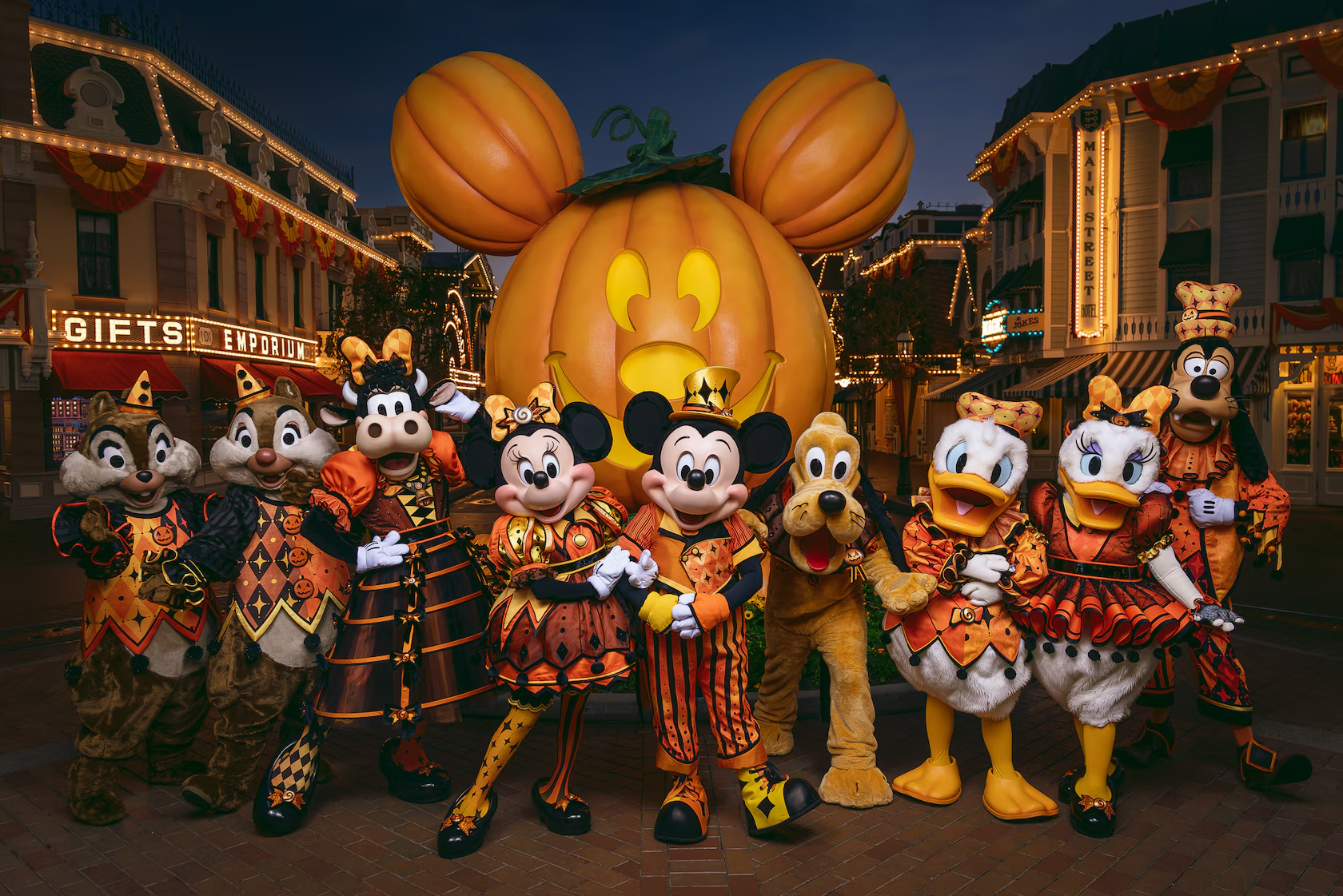
- As was the case this past summer, Disney Parks outperformed Universal and SeaWorld during the “Halloween” park season. Observed visits to Disney in October are up low-single-digits, led by Florida.
- For Universal, Florida is doing better after a soft summer season. For California, Universal has softened modestly after having a gangbuster season fueled by the excitement generated by the box office hits The Super Mario Galaxy Movie and Minions & Monsters. (See the chart below.)
- SeaWorld and United Parks & Resorts? The trends remain very soft.
- Entrances to the post-6pm daypart for Disney, Universal, and SeaWorld are each down. Our hypothesis is that the operators are marketing and packaging to drive combo tickets, which, for example, at Universal, allows for an after- 2 pm admission vs. 7pm. At Disney, post 6pm observed visits declined -2%, while Disney’s total-day visits increased low- to mid-single-digits.
- Both Disney and Universal started their Halloween events earlier this year, drawing more Halloween visits into August. Disney World's Mickey's Not-So-Scary Halloween Party started on August 7, 2026, making it the earliest start date ever in the event's history. Universal started one day earlier YoY. We don’t have the data, but based on prior management commentary, we suspect that the Halloween marketing campaigns also started earlier based on a stronger total-day trend in August and September vs. July and October.
- Also contributing to the stronger August was the shift in Labor Day into September, which allowed for a longer summer season and into the last week and September.
- Comcast / Universal Q3 results and comments pointed to ongoing “weakness” in Orlando and lower per-admission prices to boost demand and the expense of revenue growth. (Not good for United Parks.)
- With Comcast results, CEO Mike Cavenagh said, “We believe competitors (i.e. Disney) were quicker to anticipate and recognize softness in demand and adapt their marketing strategies… [and] we continue to work through capacity challenges and ride throughput at Epic given the complexities of opening the most technologically advanced theme park ever built.” (He doesn’t expect Orlando to return to growth until the 2H’27.) In management’s response to other questions, it was clear that Hollywood was a positive driver; however, they were keen to obscure its level of outperformance to keep that from Disney’s ears.